


1 / 11
Amsterdamse Poort
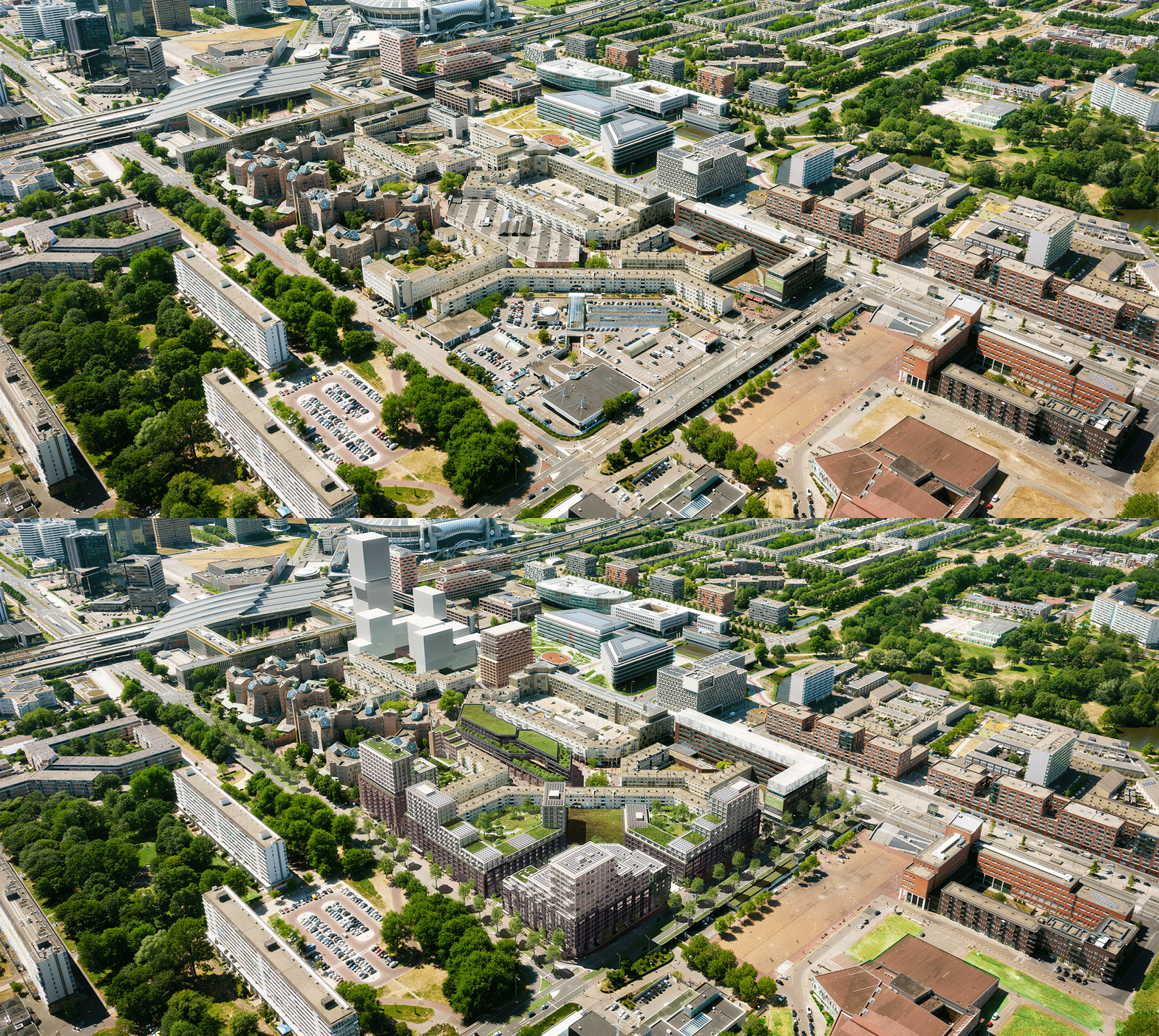
Back to overviewThe Amsterdamse Poort shopping district has played a major role in Zuidoost since the 1980s. The area is currently undergoing a major transformation to create a future-proof city center where living, working, shopping, and culture converge. Paul de Ruiter Architects is transforming Cluster 7 into a sustainable and green residential and shopping area with 400 new homes and green courtyards.
The current shopping area, dating from the 1980s, is outdated and will be transformed in the plan. The shops and the plinth will be renovated, with a strong focus on beautiful and sustainable materials that will showcase the quality and variety of the existing shops. Above the plinth, a continuous planter will be installed with climbing plants that will grow on the existing facade above. These green elements in the facade and the climbing plants will green up the shopping area, increasing biodiversity in the area.
A sustainable living environment
The current Cluster 7 consists largely of (vacant) shops on the ground floor with a large parking deck above. The current parking deck will be removed and replaced by housing and large green courtyards. The structure of the existing parking deck will be reused, and new and existing residents will soon be able to meet in the courtyards, read a book, and enjoy a space teeming with greenery. The new blocks surrounding these courtyards prioritize quality of life and living comfort. A wide wooden living gallery will be built near the courtyards, directly connected to them by external stairs. This will create a simple and quick connection between the homes and the courtyards. Furthermore, the project emphasizes the human scale and features a mix of housing types that appeal to different target groups. The blocks are characterized by urban and robust low-rise buildings and light-filled high-rise buildings. This typology aligns the design with other new developments in the area.
Nature-inclusive: the building as a rocky landscape
Currently, Cluster 7 has little greenery. However, the adjacent Bijlmerpark offers opportunities to bring greenery and biodiversity into the cluster. To facilitate this, the building has been designed as a rocky landscape. Green spaces will be created at various heights, and climbing plants will be planted on sections of the facade. This "stepping stone" principle will allow various birds and butterflies to enter the courtyards. Combined with the nesting boxes in the facades, this will increase biodiversity in the area. Several green consultants have been involved in the plan to ensure that all plants and trees will have sufficient space to grow. Rainwater will be collected in water crates under the green roofs, which will then be used to water the courtyards.
A comprehensive and sustainable design
The plan meets Amsterdam's stricter BENG (Energy Building Regulations) requirements. Sustainable energy sources will be used, and residual heat from the shops will be used to heat the apartments. The transformation plans will be certified with a BREEAM-in-use excellent certificate. The municipality and various green consultancy firms collaborated on the development of the plan. Current residents were involved in the design of the courtyards, which are being developed by Arcadis Landschap. The masterplan for the Amsterdamse Poort was created by MVSA Architects, and the third block on the site was designed by BurtonHamfelt Urban Architecture.
- Program
- 400 homes, parking, and retail plinth renovation
- Location
- Anton de Komplein, Amsterdam
- Planned completion
- 2028
- Client
- CBRE Investment Management, 3W Real Estate
- Parties involved
- Hurks, Arcadis Landscape Architecture, IMd Consulting Engineers, Hiensch Engineering, Blonk Advies, Koninklijke Ginkel Groep, Bartenbach


